
The Log Box
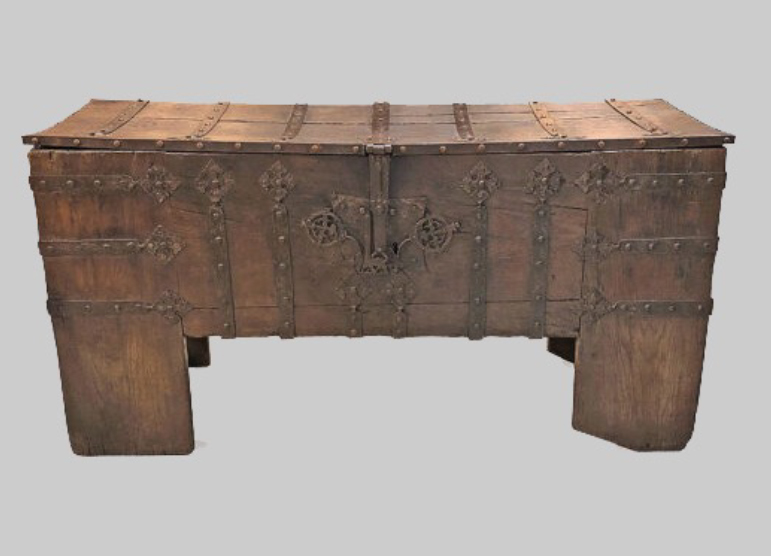
Returning home from school aged 10, there was yet another new piece my father Joe had added to the ever-growing Farley collection. This time, it was a large 16th century oak piece with ornate wrought iron work. A Westphalian – or Stollentruhe – chest, as they are called, originating from western central Germany. It made a change from the stuffed bear or fairground horse that greeted me as I opened the front door each day.
Joe had bid at Sothebys for the lot and his purchase was reported in the Times newspaper. Our grandfather commented at the news, “Well at least you will have somewhere to keep the logs!” It has been affectionately called ‘the log box’ ever since. This was back in the 1960’s and it looked rather out of place in a Queen Ann home in Bloomsbury.
More suited to a castle or church, Westphalian chests were a secure place of storage, and the scale reflected the wealth and status of its owners. Key characteristics of a Westphalian chest are high plank-like legs with iron strapwork and an ornate central lock. The defining feature of a Stollentruhe are the legs (Stollen). These high legs provided a stable base and kept the contents of the chest away from damp or dirty floors. They were also designed to be easily sawn off if damaged by rot.

The log box has been a staple of countless medieval film sets and has featured in films and TV productions, especially of the Robin Hood variety. In 1971, it was part of the set dressing for the Bond film, ‘Diamonds are Forever’. It was a solitary placement in the villain Willard Whyte’s penthouse-style lair, along with other early carvings and renaissance candlesticks.

Now a perennial favourite with designers and set decorators, I have added similar chests to the Farley antique props collection, all of which are available for rental. But for me, this piece remains the finest example we have.
Mark Farley